
University Housing Mold Problems Near UMich
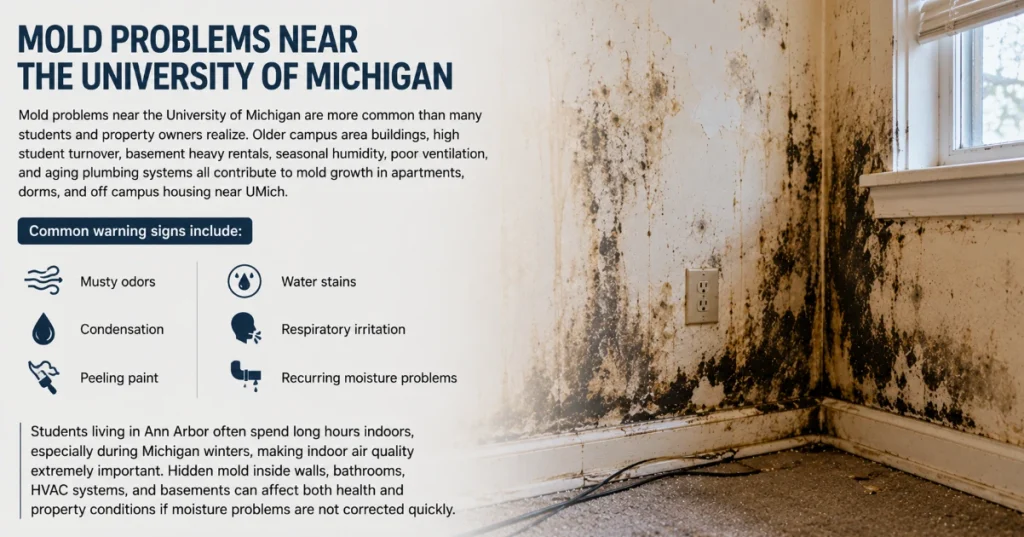
Mold problems near the University of Michigan are more common than many students and property owners realize. Older campus area buildings, high student turnover, basement heavy rentals, seasonal humidity, poor ventilation, and aging plumbing systems all contribute to mold growth in apartments, dorms, and off campus housing near UMich. Common warning signs include musty odors, condensation, water stains, peeling paint, respiratory irritation, and recurring moisture problems.
Students living in Ann Arbor often spend long hours indoors, especially during Michigan winters, making indoor air quality extremely important. Hidden mold inside walls, bathrooms, HVAC systems, and basements can affect both health and property conditions if moisture problems are not corrected quickly.
Why Mold Problems Are Common Near UMich
Competitor analysis across university housing resources, local remediation companies, and tenant discussions reveals several recurring causes of mold contamination around campus housing.
The areas surrounding the University of Michigan contain many:
- Older apartment buildings
- Historic rental homes
- Basement conversions
- High occupancy student housing units
- Poorly ventilated dorm style buildings
These structures are especially vulnerable to moisture buildup and hidden water damage.
According to the University of Michigan Environment, Health and Safety department, mold growth occurs whenever moisture accumulates in buildings or building materials and remains unresolved.
Older Student Housing Increases Mold Risks
One major issue found during competitor analysis is that many student housing properties near campus were built decades ago and often lack modern moisture control systems.
Older buildings frequently experience:
- Plumbing leaks
- Window condensation
- Roof seepage
- Poor insulation
- Outdated ventilation systems
- Basement humidity problems
Student rentals also experience heavier wear and tear due to constant turnover and high occupancy rates.
Reddit discussions from Ann Arbor renters repeatedly mention poorly maintained student apartments with visible water damage and mold concerns near campus.
Michigan Weather Creates Ideal Mold Conditions
Ann Arbor weather patterns significantly increase mold risks in university housing.
Humid Summers
Summer humidity creates excess indoor moisture, especially in apartments without proper airflow or air conditioning.
Cold Winters
During winter, warm indoor air meets cold windows and exterior walls, creating condensation that can lead to hidden mold growth.
Heavy Rain and Snow Melt
Water intrusion around basements and foundations becomes more common during storms and seasonal snow melt.
Local remediation experts in Ann Arbor consistently identify winter condensation and basement moisture as major causes of hidden mold growth in older properties.
Dorm Rooms and Shared Housing Can Trap Moisture
University housing environments often create additional moisture problems because many students share limited space.
Common contributing factors include:
- Limited airflow
- Steam from showers
- Wet clothing indoors
- Mini refrigerators creating condensation
- Closed windows during winter
- Crowded living conditions
According to discussions involving university housing environments, poorly ventilated dorms and apartments can quickly develop indoor moisture imbalance when airflow is limited.
Common Areas Where Mold Develops Near Campus Housing
Bathrooms
Shared bathrooms often experience constant humidity and poor ventilation.
Basements
Many off campus student rentals near UMich have unfinished or partially finished basements that trap moisture.
Around Windows
Window condensation is extremely common during Michigan winters.
Kitchens
Leaks beneath sinks and behind appliances frequently go unnoticed in student housing.
HVAC Systems
Dirty or poorly maintained HVAC systems can spread mold spores through the entire apartment.
Behind Drywall
Hidden leaks inside walls often create mold long before visible signs appear.
Hidden Warning Signs of Mold in Student Housing
Mold is not always immediately visible.
Students and renters should watch for:
- Persistent musty odors
- Water stains on ceilings or walls
- Peeling paint
- Bubbling drywall
- Condensation on windows
- Damp carpets
- Warped flooring
- Increased allergy symptoms
- Chronic coughing indoors
- Respiratory irritation
The University of Michigan Environment, Health and Safety department also notes that mold exposure may contribute to symptoms such as headaches, sinus problems, nasal blockage, coughing, and breathing difficulties.
How Mold Can Affect Student Health
Students living with hidden mold exposure may experience ongoing indoor air quality problems.
Potential symptoms include:
- Sneezing
- Eye irritation
- Sinus congestion
- Chronic fatigue
- Headaches
- Skin irritation
- Asthma flare ups
- Difficulty concentrating
Many renters discussing mold concerns online report symptoms improving after leaving contaminated housing environments.

Why Mold Problems Often Go Unreported
Competitor analysis shows that one overlooked issue is delayed reporting.
Students sometimes ignore warning signs because:
- They assume odors are normal in older buildings
- They do not recognize hidden mold symptoms
- Maintenance requests take time
- Leases near campus are highly competitive
- Short term tenants may not investigate moisture problems
In high demand housing markets like Ann Arbor, some renters may tolerate poor conditions due to limited housing availability and high rental costs.
Mold Problems in Off Campus Rentals
Off campus housing near the University of Michigan often presents additional mold risks because many properties are converted older homes.
These buildings commonly contain:
- Aging plumbing systems
- Crawl spaces
- Basement moisture
- Older roofing materials
- Limited insulation
- Poor drainage systems
Washtenaw County Environmental Health receives housing complaints involving mold and water damage in rental properties throughout the Ann Arbor area.
What Students Should Do If They Suspect Mold
If mold is suspected, students should act quickly before contamination spreads.
Document the Problem
Take photos of water damage, visible mold, condensation, or leaks.
Report Maintenance Issues Immediately
The University of Michigan Housing department provides repair request systems for maintenance and emergency concerns.
Improve Ventilation
Open windows when possible and reduce indoor humidity.
Avoid Disturbing Visible Mold
Scrubbing or disturbing mold without containment can spread spores into the air.
Seek Professional Inspection
Professional mold inspectors can identify hidden contamination using moisture detection tools and thermal imaging equipment.
How Professional Mold Remediation Works
Professional remediation focuses on both mold removal and moisture correction.
Typical steps include:
- Moisture inspection
- Containment of affected areas
- HEPA air filtration
- Removal of contaminated materials
- Structural drying
- Cleaning and sanitization
- Long term moisture prevention
Competitor analysis shows that the most effective remediation companies focus heavily on moisture control because mold usually returns if humidity or leaks remain unresolved.
Preventing Mold in University Housing
Students and property managers can reduce mold risks by maintaining proper airflow and moisture control.
Use Bathroom Ventilation
Run exhaust fans during and after showers.
Control Humidity
Use dehumidifiers if indoor moisture levels remain high.
Report Leaks Quickly
Even small leaks can trigger hidden mold growth within days.
Keep Air Circulating
Avoid blocking vents and maintain consistent airflow.
Inspect Windows for Condensation
Persistent condensation may indicate humidity imbalance.
Avoid Drying Wet Items Indoors
Wet clothing and towels increase indoor humidity.
Why Professional Inspections Matter
Hidden mold often spreads behind walls, ceilings, insulation, and flooring before becoming visible.
Professional inspectors commonly use:
- Moisture meters
- Infrared thermal cameras
- Hygrometers
- Air quality testing equipment
Early detection helps prevent structural damage, indoor air contamination, and expensive repairs.

Final Thoughts
University housing mold problems near UMich are often linked to older buildings, seasonal humidity, condensation, plumbing leaks, and poor ventilation. Student apartments, dorms, and off campus rentals near the University of Michigan can develop hidden mold long before visible signs appear.
The best way to protect indoor air quality and prevent serious structural damage is to identify moisture problems early, improve ventilation, and schedule professional mold inspections when warning signs appear. Fast action helps create safer and healthier living conditions for students, renters, and property owners throughout Ann Arbor.