
Why Older Ann Arbor Homes Develop Mold Faster
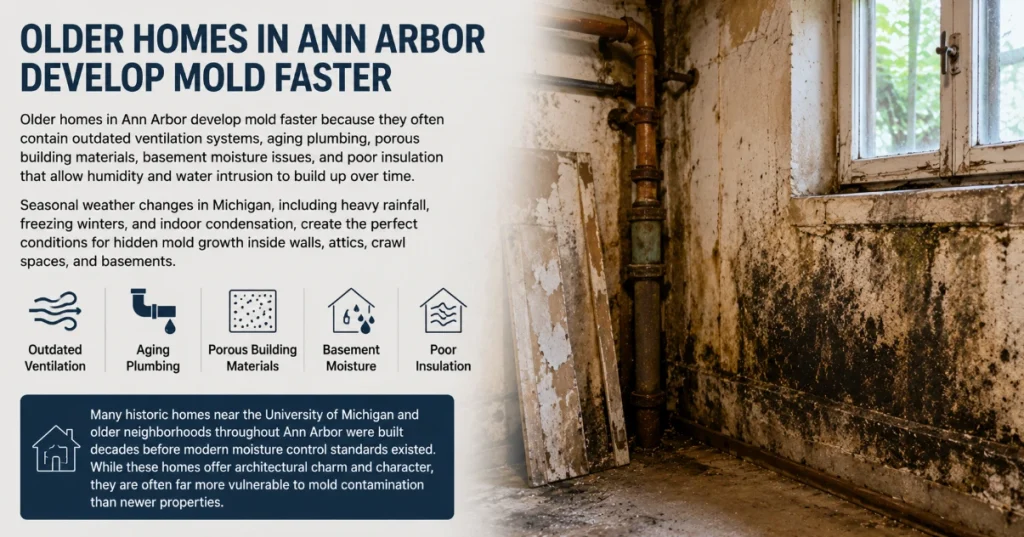
Older homes in Ann Arbor develop mold faster because they often contain outdated ventilation systems, aging plumbing, porous building materials, basement moisture issues, and poor insulation that allow humidity and water intrusion to build up over time. Seasonal weather changes in Michigan, including heavy rainfall, freezing winters, and indoor condensation, create the perfect conditions for hidden mold growth inside walls, attics, crawl spaces, and basements.
Many historic homes near the University of Michigan and older neighborhoods throughout Ann Arbor were built decades before modern moisture control standards existed. While these homes offer architectural charm and character, they are often far more vulnerable to mold contamination than newer properties.
Why Mold Is More Common in Older Homes
Analysis across mold remediation websites, home inspection resources, and homeowner discussions shows a common pattern. Older homes tend to trap moisture because they were built with materials and construction methods that do not manage humidity the same way modern homes do.
Many older Ann Arbor homes experience:
- Poor airflow
- Basement seepage
- Roof leaks
- Window condensation
- Aging insulation
- Hidden plumbing leaks
- Inefficient attic ventilation
These conditions create dark, damp spaces where mold spores can spread rapidly behind drywall, beneath flooring, and inside ceilings.
Ann Arbor Climate Creates Ideal Conditions for Mold
Michigan weather plays a major role in mold development.
Homes in Ann Arbor experience constant moisture fluctuations throughout the year due to:
Humid Summers
Summer humidity levels can raise indoor moisture levels, especially in homes without modern ventilation or dehumidification systems.
Freezing Winters
During winter, warm indoor air meets cold surfaces like windows, exterior walls, and attics, causing condensation buildup.
Heavy Rainfall and Snow Melt
Water intrusion around foundations, basements, and roofs becomes more common during seasonal storms and melting snow.
According to local restoration experts, older Ann Arbor homes built before the 1970s are especially vulnerable because many lack proper attic ventilation and moisture barriers.
Aging Plumbing Systems Cause Hidden Moisture
One of the most common reasons older homes develop mold faster is aging plumbing.
Older pipes can develop:
- Slow leaks
- Corrosion
- Cracks behind walls
- Condensation buildup
Even a small hidden leak can keep drywall and insulation damp for weeks or months.
Competitor analysis shows that hidden plumbing leaks are one of the leading causes of mold growth behind drywall in older residential properties.
Older Building Materials Absorb Moisture Easily
Many historic Ann Arbor homes were built using highly porous materials that absorb moisture more easily than modern moisture resistant products.
Common older materials include:
- Plaster walls
- Untreated wood framing
- Cellulose insulation
- Older drywall
- Wood trim and baseboards
These materials retain moisture longer, giving mold spores time to spread internally.
Restoration professionals consistently note that older building materials become increasingly vulnerable after decades of humidity exposure and seasonal temperature changes.

Basement Moisture Is Extremely Common in Older Ann Arbor Homes
Basements are one of the biggest mold problem areas in older Michigan homes.
Common causes include:
- Foundation cracks
- Poor exterior drainage
- Groundwater seepage
- Sump pump failures
- High humidity
Finished basements are especially vulnerable because moisture often becomes trapped behind drywall or under flooring.
According to local remediation companies serving Ann Arbor, homeowners frequently discover hidden mold only after noticing musty odors or warped materials in basement areas.
Poor Ventilation Increases Indoor Humidity
Many older homes were not designed with modern ventilation systems.
Without proper airflow, humidity becomes trapped in:
- Bathrooms
- Kitchens
- Laundry rooms
- Crawl spaces
- Attics
Competitor analysis reveals that poor ventilation is one of the most overlooked mold risk factors in older homes.
When moisture cannot escape properly, condensation forms on walls, ceilings, windows, and attic surfaces.
This creates ideal conditions for hidden mold growth.
Attic Condensation Is a Major Problem in Michigan Winters
Attics in older Ann Arbor homes often experience severe condensation during winter.
Warm indoor air rises into cold attic spaces where moisture condenses beneath the roof decking.
Local restoration experts report that homes in neighborhoods with aging insulation and outdated ventilation systems experience some of the highest attic mold risks during Michigan winters.
Warning signs include:
- Frost inside attics
- Musty smells
- Black spotting on rafters
- Damp insulation
- Water stains on ceilings
Renovations Can Sometimes Make Mold Worse
One surprising issue highlighted by competitor analysis is that some energy efficiency upgrades in older homes unintentionally increase mold risks.
New windows, insulation, and air sealing upgrades can reduce natural airflow that older homes once relied on for drying moisture.
Without proper ventilation improvements, humidity may become trapped inside the structure.
This can lead to:
- Window condensation
- Mold behind drywall
- Basement humidity
- Attic moisture buildup
Homeowners often become confused because mold problems sometimes appear only after renovations are completed.
Common Signs of Mold in Older Homes
Mold often remains hidden long before it becomes visible.
Homeowners should watch for:
- Persistent musty odors
- Water stains on ceilings or walls
- Peeling paint
- Bubbling drywall
- Condensation on windows
- Soft or warped walls
- Increased allergy symptoms
- Respiratory irritation indoors
According to homeowner discussions online, many families living in older homes notice symptoms improve when they leave the property.

Why Hidden Mold Is Difficult to Detect
One of the biggest dangers in older homes is hidden mold growth.
Mold commonly spreads behind:
- Drywall
- Insulation
- Cabinets
- Flooring
- Ceiling cavities
- HVAC systems
Because the contamination is hidden, homeowners may not realize there is a problem until structural damage or health symptoms appear.
Professional inspectors often use:
- Infrared thermal cameras
- Moisture meters
- Air quality testing
- Hygrometers
to identify moisture and hidden contamination safely.
Health Risks Linked to Mold Exposure
Mold exposure can negatively affect indoor air quality and trigger respiratory symptoms.
Common health effects include:
- Sneezing
- Nasal congestion
- Eye irritation
- Chronic coughing
- Skin irritation
- Headaches
- Asthma flare ups
The Environmental Protection Agency emphasizes that controlling moisture is the most important step in preventing indoor mold growth.
Why DIY Mold Removal Often Fails
Many homeowners attempt to clean mold using bleach sprays or household cleaners.
However, competitor analysis and homeowner experiences consistently show that surface cleaning alone rarely solves the problem if moisture remains trapped inside walls or structural materials.
Professional remediation focuses on:
- Moisture detection
- Containment
- Air filtration
- Structural drying
- Removal of contaminated materials
- Long term prevention
Without addressing the moisture source, mold usually returns.
How to Prevent Mold in Older Ann Arbor Homes
Older homes require proactive moisture management throughout the year.
Control Indoor Humidity
Keep humidity below 50 percent using dehumidifiers and ventilation systems.
Inspect Plumbing Regularly
Check older pipes and water lines for leaks or corrosion.
Improve Attic Ventilation
Proper airflow reduces winter condensation and moisture buildup.
Seal Foundation Cracks
Prevent groundwater intrusion and basement seepage.
Maintain Gutters and Drainage
Direct water away from the home foundation.
Schedule Professional Mold Inspections
Early detection helps prevent hidden contamination from spreading.
When Should You Call a Mold Remediation Professional?
You should contact a professional if you notice:
- Recurring mold growth
- Persistent musty odors
- Water damage after storms or leaks
- Condensation problems
- Visible mold on walls or ceilings
- Worsening indoor allergy symptoms
Certified mold remediation specialists can identify hidden moisture, remove contaminated materials safely, and restore healthy indoor air quality.
Final Thoughts
Older Ann Arbor homes develop mold faster because of aging construction materials, outdated ventilation systems, hidden plumbing leaks, basement moisture, and seasonal condensation caused by Michigan weather. While these homes offer charm and historic value, they also require more careful moisture management to prevent mold contamination.
The key to protecting your home is early detection, humidity control, and professional remediation when necessary. Addressing moisture problems quickly helps prevent structural damage, indoor air quality issues, and costly long term repairs.