
Water Damage Mold Removal Ann Arbor
Water damage is one of the most common causes of mold growth—and once it starts, it spreads fast. Our professional water damage mold removal services in Ann Arbor are designed to eliminate mold at its source and restore your property safely.
Whether the damage comes from flooding, burst pipes, roof leaks, or appliance failures, excess moisture creates the perfect environment for mold to develop within 24–48 hours. Without proper treatment, it can quickly affect walls, flooring, insulation, and indoor air quality.
Call Now Instantly
+1 734 997 7284

How Water Damage Leads to Mold Growth
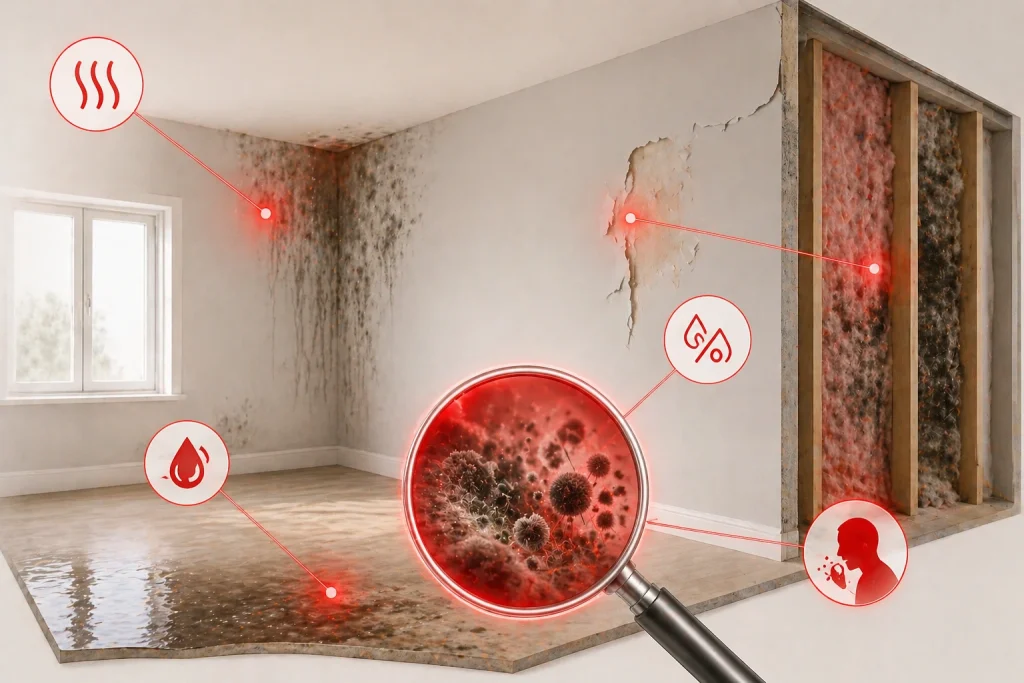
Mold thrives in damp, humid environments. After water intrusion, moisture can remain trapped in hidden areas such as:
- Behind drywall and insulation
- Under flooring and carpets
- Inside ceilings and crawl spaces
- Within HVAC systems and ductwork
If not properly dried, these areas become breeding grounds for mold colonies that release airborne spores and spread throughout your property.
Signs You Have Mold After Water Damage
After a water-related incident, it’s important to watch for early warning signs of mold contamination:
- Persistent musty or damp odors
- Discoloration on walls or ceilings
- Warped or peeling surfaces
- Increased indoor humidity
- Allergy-like symptoms such as coughing or irritation linked to conditions like Asthma
Early detection can significantly reduce damage and cleanup costs.

Our Water Damage Mold Removal Process
We follow a comprehensive approach that addresses both the mold and the underlying moisture issue.
- Moisture Inspection & Damage Assessment We identify affected areas using advanced moisture detection tools to locate hidden water damage and mold growth.
- Water Extraction & Drying Standing water is removed, and industrial drying equipment is used to eliminate excess moisture from the structure.
- Containment of Affected Areas We isolate contaminated zones to prevent mold spores from spreading to clean areas of your home or business.
- Safe Mold Removal Using professional-grade filtration systems such as HEPA air scrubber units, we remove mold safely and thoroughly.
- Cleaning, Sanitization & Prevention All affected surfaces are treated to eliminate residual contamination and reduce the risk of future mold growth.
Common Causes of Water Damage Mold And Professional Restoration
Properties across Washtenaw County often experience mold growth due to Basement flooding during heavy rain
- Pipe leaks and plumbing failures
- Roof damage and attic moisture
- Appliance leaks (water heaters, dishwashers, washing machines)
- Poor ventilation in bathrooms and kitchens
Local climate conditions, including seasonal humidity and temperature changes, can accelerate mold development if moisture is not controlled. DIY cleanup may remove visible mold, but it often fails to address hidden contamination and moisture sources. Professional water damage mold remediation ensures Complete removal of mold colonies
- Proper drying of affected materials
- Prevention of cross-contamination
- Improved indoor air quality. Mold spores can travel through the air and settle in new areas, making professional containment and filtration essential.


Protecting Your Property With Trusted Water Damage Mold Removal in Ann Arbor
Taking immediate steps after water damage can reduce the risk of mold growth:
- Dry affected areas as quickly as possible
- Remove wet materials that cannot be salvaged
- Improve ventilation and airflow
- Schedule a professional inspection
Acting early can prevent minor water issues from turning into major mold problems.
We provide reliable, effective mold removal solutions tailored to properties in Ann Arbor. Our goal is not just to remove mold, but to restore a safe, healthy indoor environment.

Service Areas for Water Damage Restoration in Ann Arbor
We provide water damage mold restoration services in Ann Arbor and near by areas.
Frequently Asked Questions
Mold can begin developing within 24 to 48 hours after water exposure if moisture is not properly removed. In areas like Ann Arbor, indoor humidity and seasonal weather changes can accelerate this process, especially in enclosed or poorly ventilated spaces.
Yes, because mold often grows in hidden areas such as behind walls, under flooring, and inside insulation. Even if no visible growth is present, trapped moisture can lead to mold colonies that spread unnoticed. A professional inspection helps detect early-stage contamination.
Water damage restoration focuses on removing water and drying the structure, while mold removal targets existing mold growth and contamination. In many cases, both services are needed together to fully restore a property and prevent future issues.
Mold exposure can affect indoor air quality and may trigger symptoms like coughing, irritation, or breathing difficulty. People with sensitivities or conditions such as Asthma may experience stronger reactions when mold spores become airborne.
Costs vary depending on the extent of water damage, size of the affected area, and severity of mold growth. Minor issues may require limited cleanup, while widespread contamination involving structural materials can increase the overall cost.
Yes, mold can return if the underlying moisture problem is not fully resolved. Effective remediation includes thorough drying, humidity control, and preventive treatments to stop regrowth.
Early signs include:
- Musty or damp odors
- Discoloration or spotting on surfaces
- Warping or peeling materials
- Increased indoor humidity
These indicators often appear before mold becomes clearly visible.
Yes, materials like carpet, insulation, and drywall that remain wet for extended periods may need to be removed. Retaining moisture-damaged materials increases the risk of mold development and spread.
Professionals use specialized tools such as air filtration systems like HEPA air scrubber units, industrial dehumidifiers, and moisture detection devices to ensure complete remediation and air quality control.
It depends on the severity of the contamination. Small, isolated areas may pose minimal risk, but widespread mold growth can affect indoor air quality. In more serious cases, temporary relocation may be recommended during remediation.