
Mold Remediation Ann Arbor: Complete Homeowner Guide
If you notice musty odors, water stains, peeling paint, or visible mold in your home, professional mold remediation in Ann Arbor is the safest and most effective solution. Mold spreads quickly in humid or moisture affected areas and can damage walls, ceilings, insulation, flooring, and indoor air quality. A proper remediation process identifies the moisture source, removes contaminated materials, cleans the air, and prevents future growth.
Homeowners in Ann Arbor often face mold issues due to seasonal humidity, basement moisture, winter condensation, and aging properties near the University of Michigan. Professional remediation helps restore healthy indoor conditions while protecting your property from long term structural damage.

Mold remediation is the process of identifying, containing, removing, and preventing mold growth inside a property. Unlike simple mold cleaning, remediation focuses on solving the root moisture problem so mold does not return.
Professional remediation usually includes:
- Moisture inspection
- Mold containment
- HEPA air filtration
- Removal of contaminated materials
- Sanitization and cleaning
- Structural drying
- Prevention strategies
Many leading restoration companies in Ann Arbor emphasize moisture control and air purification as essential parts of remediation because mold almost always returns when humidity or leaks are ignored.
Why Mold Problems Are Common in Ann Arbor
Homes in Ann Arbor experience unique environmental conditions that encourage mold growth throughout the year.
Common causes include:
Seasonal Humidity
Michigan summers often create excess indoor moisture, especially in basements and crawl spaces. Without dehumidification, mold spores can spread rapidly.
Winter Condensation
Cold winters create condensation around windows, attics, and poorly insulated walls. Reddit homeowners in Ann Arbor frequently report mold caused by winter humidity imbalance and attic condensation.
Older Homes
Many older Ann Arbor homes contain outdated ventilation systems, aging roofs, and porous building materials that trap moisture.
Basement Moisture
Basements are one of the most common mold hotspots in Michigan because of groundwater intrusion, sump pump failures, and poor drainage systems.
Signs You Need Mold Remediation
Mold is not always visible immediately. Many infestations begin behind drywall, under flooring, or inside attics.
Watch for these warning signs:
- Persistent musty odors
- Dark stains on ceilings or walls
- Peeling paint or bubbling drywall
- Increased indoor humidity
- Condensation around windows
- Allergy symptoms indoors
- Coughing or respiratory irritation
- Warped flooring or damp materials
According to local restoration professionals, mold can begin growing within 24 to 48 hours after water damage occurs

Health Risks Associated With Mold Exposure
Indoor mold exposure can negatively affect air quality and trigger health symptoms, especially for children, seniors, and individuals with asthma or allergies.
Potential symptoms include:
- Sneezing
- Eye irritation
- Nasal congestion
- Skin irritation
- Chronic coughing
- Headaches
- Breathing difficulties
The Environmental Protection Agency recommends addressing moisture and mold issues quickly to reduce indoor contamination risks.
Areas Where Mold Commonly Grows
Basement Mold
Basements often experience high humidity and poor airflow, making them ideal environments for mold colonies.
Attic Mold
Poor roof ventilation and condensation buildup commonly lead to attic mold in Michigan homes.
Bathroom Mold
Bathrooms trap steam and moisture, especially when exhaust systems are ineffective.
Crawl Space Mold
Damp crawl spaces can spread mold spores throughout the home through airflow movement.
HVAC Systems
Mold inside ductwork and vents can circulate spores through the entire property.
Mold Removal vs Mold Remediation
Many homeowners confuse mold removal with mold remediation, but they are not the same process.
Mold Removal
Mold removal focuses only on cleaning visible mold from surfaces.
Mold Remediation
Mold remediation addresses contamination, moisture problems, air quality, and future prevention.
Industry experts and Ann Arbor restoration companies consistently emphasize that remediation is more comprehensive because it prevents recurring growth
Why DIY Mold Removal Often Fails
Many homeowners attempt to clean mold using bleach sprays or surface cleaners. While this may temporarily remove stains, it usually does not eliminate hidden contamination or moisture sources.
Local homeowners on Reddit repeatedly mention that mold often returns unless the underlying humidity or leak problem is corrected.
DIY removal can also spread spores into unaffected areas if containment measures are not used properly.
How to Prevent Mold in Your Home
Preventive maintenance is essential in Michigan homes.
Reduce Indoor Humidity
Keep indoor humidity below 50 percent using dehumidifiers and ventilation systems.
Fix Water Leaks Quickly
Address plumbing leaks, roof damage, and foundation seepage immediately.
Improve Airflow
Use bathroom exhaust fans and improve attic ventilation.
Maintain Gutters and Drainage
Direct water away from the foundation to reduce basement moisture.
Inspect High Risk Areas Regularly
Check basements, attics, crawl spaces, and utility rooms for signs of dampness.
Choosing the Right Mold Remediation Company in Ann Arbor
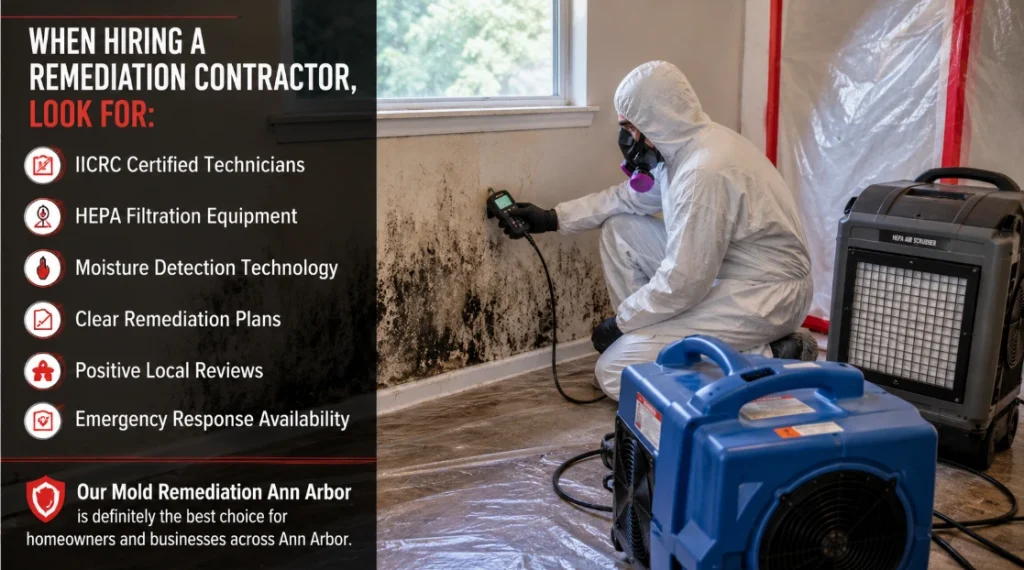
When hiring a remediation contractor, look for:
- IICRC certified technicians
- HEPA filtration equipment
- Moisture detection technology
- Clear remediation plans
- Positive local reviews
- Emergency response availability.
And Our Mold remediation Ann Arbor is definitely the best choice for homeowners and businesses across Ann Arbor
Final Thoughts
Mold problems in Ann Arbor are often caused by moisture issues hidden behind walls, inside attics, or beneath flooring. Ignoring these problems can lead to structural damage, poor indoor air quality, and expensive repairs.
Professional mold remediation goes beyond surface cleaning by identifying moisture sources, removing contamination safely, and preventing future growth. Whether you are dealing with basement mold, attic condensation, or water damage after flooding, fast action is the best way to protect your home and health.