
Mold in Apartments and Rental Properties
Mold in apartments and rental properties is commonly caused by moisture problems such as leaks, humidity buildup, poor ventilation, condensation, and water damage. Because multiple units often share walls, plumbing systems, and ventilation pathways, mold can spread more easily in apartment buildings than in single family homes. In Ann Arbor and nearby areas like Ypsilanti, Saline, Dexter, Chelsea, Canton, and Pittsfield Township, seasonal humidity changes, winter condensation, and aging rental properties can increase the risk of hidden mold growth.
Mold is not always visible right away. It frequently develops behind drywall, beneath flooring, inside HVAC systems, and around plumbing fixtures long before tenants notice obvious warning signs. Early detection and professional remediation are essential for protecting indoor air quality and preventing costly structural damage.

Rental properties face unique moisture challenges because multiple residents share common building systems.
Common causes of mold in apartments include:
- Plumbing leaks between units
- Roof leaks
- Bathroom humidity
- Kitchen moisture
- Poor ventilation
- HVAC condensation
- Basement moisture
- Flooding events
When moisture remains trapped inside walls or ceilings, mold spores can begin growing rapidly on drywall, insulation, and wooden framing materials.
Many apartment complexes throughout Ann Arbor contain older infrastructure that may be more vulnerable to hidden water damage and moisture intrusion.
One of the most common causes of apartment mold is hidden plumbing leaks.
Because pipes often run through shared walls and ceilings, water can travel unnoticed between units for extended periods.
Common leak sources include:
- Bathroom plumbing
- Kitchen sink lines
- Water supply pipes
- Dishwasher connections
- Laundry systems
- HVAC condensate lines
Tenants may not notice the leak until mold appears on walls or ceilings.
Many apartments experience ventilation problems because of limited airflow and shared building systems.
Poor ventilation often causes:
- Condensation on windows
- Damp bathrooms
- Lingering humidity
- Musty odors
- Ceiling discoloration
Older apartment buildings throughout Ypsilanti, Dexter, and Chelsea frequently experience airflow issues that contribute to recurring mold problems.
Bathroom Mold in Rental Properties
Bathrooms are one of the most common locations for mold growth inside apartments.
Daily activities such as showering and bathing create large amounts of moisture.
Mold often develops on:
- Bathroom ceilings
- Tile grout
- Caulking
- Drywall
- Window frames
- Ventilation systems
Without proper exhaust ventilation, humidity remains trapped and creates ideal conditions for mold growth.
Kitchen Moisture Can Lead to Mold
Kitchens generate moisture from cooking, dishwashing, and plumbing systems.
Common mold locations include:
- Beneath sinks
- Behind refrigerators
- Around dishwashers
- Inside cabinets
- Around windows
Many property owners overlook small leaks that eventually lead to widespread hidden contamination.
Window Condensation During Michigan Winters
Winter condensation is a major mold concern in Michigan apartment buildings.
Warm indoor air meeting cold window surfaces creates moisture that can damage surrounding materials.
Common warning signs include:
- Water droplets on windows
- Peeling paint
- Damp drywall
- Mold around window frames
- Musty odors
Apartment buildings near the University of Michigan frequently experience condensation related mold issues during freezing winter temperatures.
Common Warning Signs of Mold in Apartments
Mold often remains hidden before visible growth appears.
Tenants and property managers should watch for:
- Persistent musty odors
- Water stains on walls or ceilings
- Peeling paint
- Bubbling drywall
- Soft wall surfaces
- Increased indoor humidity
- Visible discoloration
- Respiratory irritation indoors
These signs may indicate hidden contamination behind surfaces.

How Mold Affects Indoor Air Quality
Mold growth inside rental properties can impact indoor environmental quality.
Exposure may contribute to:
- Sneezing
- Nasal congestion
- Eye irritation
- Chronic coughing
- Asthma flare ups
- Respiratory discomfort
The Environmental Protection Agency states that mold exposure may trigger health symptoms in moisture affected indoor environments.
Can Mold Spread Between Apartment Units?
Yes. Mold contamination can spread between units when moisture problems affect shared structural systems.
Potential pathways include:
- Shared walls
- Ceiling cavities
- HVAC systems
- Plumbing chases
- Ventilation systems
This is why building wide inspections are often necessary when mold is discovered in multi unit properties.
Who Is Responsible for Mold in Rental Properties?
Responsibility depends on the source of the moisture problem and local housing regulations.
Property owners are generally responsible for:
- Structural leaks
- Roof damage
- Plumbing failures
- Building maintenance issues
- Ventilation deficiencies
Tenants may be responsible for issues related to neglect or failure to report water damage promptly.
Property owners should always address moisture concerns quickly to reduce liability and prevent larger remediation costs.
Why Older Apartment Buildings Face Greater Mold Risks
Older rental properties throughout Ann Arbor, Saline, Canton, and Pittsfield Township often experience mold issues more frequently because they may contain:
- Aging plumbing systems
- Older roofing materials
- Poor insulation
- Outdated ventilation systems
- Hidden structural moisture
Historic apartment buildings are especially vulnerable to recurring mold problems during seasonal weather changes.
Professional Mold Inspection for Rental Properties
Professional mold inspections help identify contamination that may not be visible during routine maintenance.
Inspectors commonly use:
- Moisture meters
- Thermal imaging cameras
- Hygrometers
- Air quality testing equipment
- Visual inspections
These tools help locate hidden moisture inside walls, ceilings, and shared building systems.
How Mold Is Removed From Apartments
Professional remediation focuses on eliminating both mold and the moisture conditions causing contamination.
Inspection and Moisture Detection
The source of moisture is identified.
Containment
Affected areas are isolated to prevent spores from spreading.
Mold Removal
Contaminated materials are removed safely using industry approved methods.
HEPA Air Filtration
Air scrubbers help improve indoor air quality during remediation.
Cleaning and Sanitization
Surfaces are cleaned and treated to reduce residual contamination.
Moisture Correction
Leaks, humidity problems, and ventilation issues are addressed to prevent future growth.
How Property Owners Can Prevent Mold
Property owners should implement proactive moisture management strategies.
Conduct Regular Inspections
Routine inspections help identify water damage early.
Repair Leaks Immediately
Prompt repairs prevent moisture from spreading behind surfaces.
Improve Building Ventilation
Proper airflow reduces humidity levels.
Monitor Indoor Humidity
Maintain humidity levels between 30 and 50 percent.
Maintain Roofing Systems
Regular roof inspections help prevent water intrusion.
Inspect HVAC Systems
Proper maintenance reduces condensation related mold risks.
When Should Tenants Report Mold?
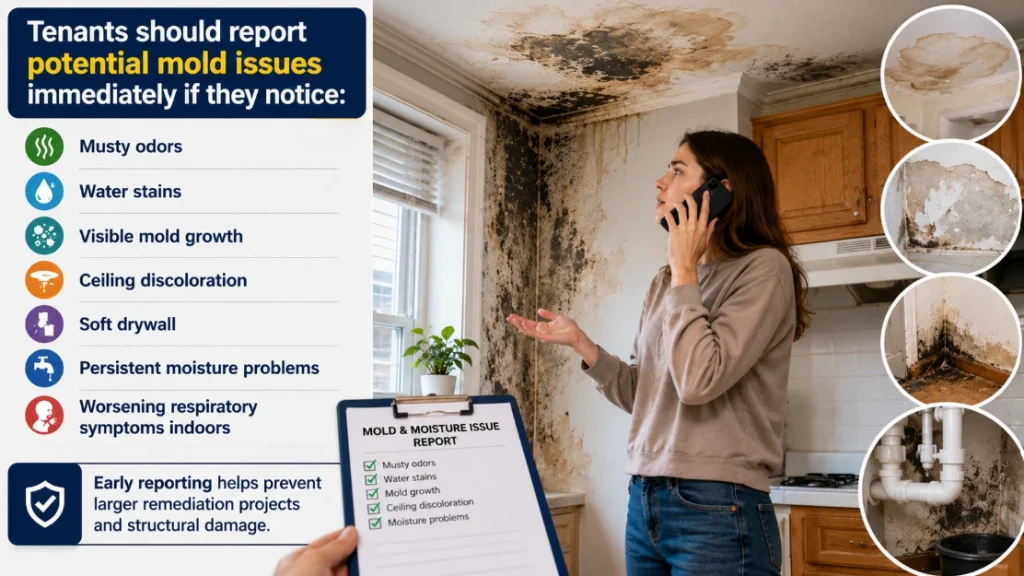
Tenants should report potential mold issues immediately if they notice:
- Musty odors
- Water stains
- Visible mold growth
- Ceiling discoloration
- Soft drywall
- Persistent moisture problems
- Worsening respiratory symptoms indoors
Early reporting helps prevent larger remediation projects and structural damage.
Final Thoughts
Mold in apartments and rental properties is often caused by hidden leaks, poor ventilation, humidity buildup, and condensation. Buildings throughout Ann Arbor, Ypsilanti, Saline, Dexter, Chelsea, Canton, and nearby Michigan communities face elevated mold risks because of seasonal weather changes and aging building infrastructure.
The best way to prevent mold is through regular inspections, moisture control, prompt repairs, and proper ventilation. Early detection and professional remediation help protect tenants, preserve property value, and maintain healthier indoor living environments for everyone.