
Can Mold Grow Inside Air Ducts?
Yes, mold can grow inside air ducts when moisture, humidity, dust, and poor ventilation create damp conditions inside an HVAC system. Air ducts often contain dust particles and organic debris that mold spores use as a food source. When condensation or hidden moisture develops inside ductwork, mold can spread through the ventilation system and circulate contaminated air throughout the property. In Ann Arbor and nearby areas like Ypsilanti, Saline, Dexter, Chelsea, Canton, and Pittsfield Township, seasonal humidity changes and winter condensation frequently increase the risk of mold inside HVAC systems and ductwork.
Because air ducts are hidden behind ceilings, walls, and floors, homeowners often do not realize mold is present until they notice musty odors, indoor air quality problems, or worsening allergy symptoms.

Why Mold Develops Inside Air Ducts
Air ducts can become vulnerable to mold when moisture combines with dust and restricted airflow.
Common causes of mold inside duct systems include:
- Condensation buildup
- High indoor humidity
- Dirty air filters
- Water leaks near ductwork
- Poor HVAC maintenance
- Basement moisture
- Flooding or water damage
- Improper insulation
When ducts remain damp for extended periods, mold spores may begin colonizing insulation, metal surfaces, and accumulated debris inside the system.
Homes throughout Ann Arbor and older Michigan neighborhoods frequently experience HVAC moisture problems because seasonal weather creates constant indoor humidity fluctuations.
Condensation commonly develops when warm humid air contacts cooler duct surfaces.
This is especially common during:
- Humid summer months
- Winter heating cycles
- Poor ventilation conditions
- Basement humidity problems
- Air conditioning operation
Condensation may collect inside duct insulation, near vents, or around evaporator coils where moisture remains trapped.
Homes near the University of Michigan and older residential properties throughout Ann Arbor often experience winter condensation problems because of aging insulation and ventilation systems.
Dirty Ductwork Encourages Mold Growth
Dust and debris inside ducts provide organic material that mold spores can grow on.
Over time, dirty ducts may accumulate:
- Dust particles
- Pet dander
- Insulation fibers
- Pollen
- Organic debris
If moisture enters the system, these materials can support microbial growth inside ductwork and vents.
Older homes throughout Ypsilanti, Chelsea, and Saline commonly contain aging duct systems with years of dust buildup.
Flooding and water intrusion frequently affect HVAC systems and ductwork.
Water damage may occur because of:
- Basement flooding
- Roof leaks
- Plumbing failures
- Crawl space moisture
- Condensate drain overflows
Once moisture enters duct systems, mold can spread quickly into insulation and surrounding building materials.
Common Warning Signs of Mold Inside Air Ducts
Mold inside ductwork is not always immediately visible.
Homeowners should watch for:
- Persistent musty odors
- Increased indoor humidity
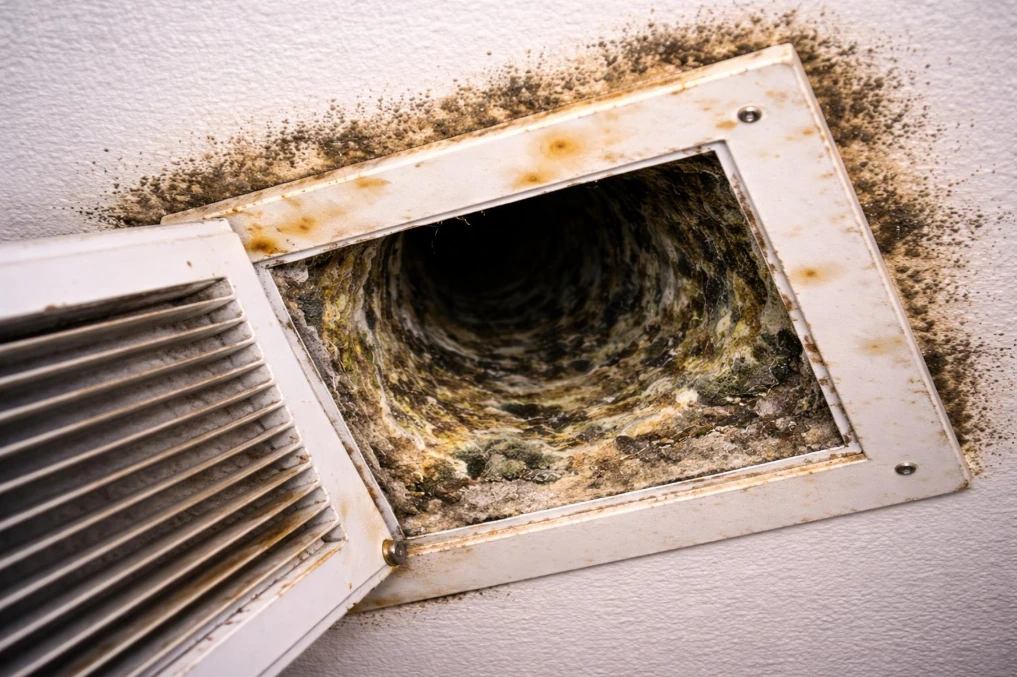
- Visible mold near air vents
- Dust buildup around registers
- Worsening allergy symptoms indoors
- Respiratory irritation
- Condensation near vents
- Uneven airflow
Many homeowners notice odors becoming stronger when heating or cooling systems begin operating.
Musty Smells Coming From Air Vents
One of the most common signs of HVAC mold contamination is a strong musty smell coming from supply vents.
The odor may become worse:
- When air conditioning turns on
- During heating cycles
- In humid weather
- After periods of inactivity
Persistent odors often indicate microbial growth somewhere inside the ventilation system.
Mold Around HVAC Registers and Ceiling Vents
Visible discoloration around air vents may indicate hidden contamination inside ductwork.
Homeowners may notice:
- Black spots near vents
- Ceiling staining around ducts
- Damp vent covers
- Mold around insulation
Because HVAC systems circulate air throughout the home, contamination inside one section of ductwork may spread spores into multiple rooms.
Indoor Air Quality Problems
Mold inside air ducts may impact indoor environmental quality throughout the property.
Exposure may contribute to:
- Sneezing
- Nasal congestion
- Eye irritation
- Chronic coughing
- Asthma flare ups
- Respiratory discomfort
- Headaches indoors
The Environmental Protection Agency explains that mold exposure may contribute to respiratory symptoms in moisture affected indoor environments.
Why Older Homes Face Higher Risks
Older homes throughout Ann Arbor, Dexter, Canton, and Pittsfield Township often experience HVAC mold issues faster because they may contain:
- Aging duct systems
- Poor insulation
- Outdated ventilation
- Basement moisture problems
- Crawl space humidity
- Limited airflow
Historic homes commonly develop hidden moisture conditions inside enclosed structural spaces where duct systems are located.
Can Mold Spread Through the Entire Home?
Yes, mold inside ductwork can spread spores into multiple living areas because HVAC systems continuously circulate air.
Contamination may affect:
- Bedrooms
- Living rooms
- Kitchens
- Bathrooms
- Basements
- Office spaces
This is why HVAC related mold problems often impact overall indoor air quality rather than a single room.
How Professionals Inspect Mold Inside Air Ducts
Professional mold inspections help identify hidden contamination inside HVAC systems before severe indoor air quality problems develop.
Inspectors commonly use:
- Moisture meters
- HVAC inspections
- Hygrometers
- Thermal imaging cameras
- Air quality testing equipment
Professionals may inspect evaporator coils, insulation, duct interiors, and ventilation systems for hidden moisture buildup.
How Mold Is Removed From Air Ducts
Professional remediation focuses on removing contamination while correcting the moisture conditions causing mold growth.
HVAC System Inspection
The source of moisture and contamination is identified.
Containment Procedures
Affected areas may be isolated during remediation.
HEPA Air Filtration
Air scrubbers help reduce airborne spores during cleaning.
Duct Cleaning
Contaminated ducts may require professional cleaning or replacement.
Coil and Vent Cleaning
HVAC components are cleaned and sanitized to reduce microbial growth.
Moisture Control
Humidity and condensation problems are corrected to prevent future contamination.
How to Prevent Mold Inside Air Ducts
Preventing duct mold requires proper HVAC maintenance and indoor moisture control.
Replace Air Filters Regularly
Dirty filters restrict airflow and trap moisture.
Maintain Indoor Humidity
Keep humidity between 30 and 50 percent.
Schedule HVAC Inspections
Routine maintenance helps identify condensation and drainage problems early.
Improve Ventilation
Proper airflow reduces moisture buildup inside duct systems.
Address Water Damage Quickly
Leaks and flooding should be repaired immediately to prevent contamination.
Inspect Basements and Crawl Spaces
Moisture near HVAC equipment often contributes to hidden duct contamination.
Keep Drain Lines Clear
Blocked condensate drains may cause excess moisture near cooling systems.
Why DIY Duct Cleaning Often Fails
Many homeowners attempt to clean visible vents without addressing hidden contamination deeper inside the HVAC system.
This often allows mold to return because:
- Moisture remains trapped
- Humidity stays elevated
- Duct insulation remains contaminated
- Condensation problems continue
Professional remediation addresses both contamination and the environmental conditions allowing mold to grow.

When Should You Call a Mold Remediation Professional?
You should contact a professional if you notice:
- Persistent musty odors
- Visible mold near vents
- Recurring indoor humidity problems
- Allergy symptoms worsening indoors
- Water damage near HVAC systems
- Condensation around ductwork
- Poor indoor air quality
Early remediation helps prevent widespread contamination and structural moisture damage.
Final Thoughts
Mold can absolutely grow inside air ducts when condensation, humidity, dust buildup, and hidden moisture create damp conditions inside HVAC systems. Homes throughout Ann Arbor, Ypsilanti, Saline, Dexter, Chelsea, Canton, and nearby Michigan communities are especially vulnerable because seasonal climate changes create ongoing moisture fluctuations indoors.
The best way to prevent mold inside air ducts is to maintain HVAC systems properly, control indoor humidity, improve ventilation, and address water damage quickly before contamination spreads through the home. Professional inspections and remediation help protect indoor air quality, ventilation systems, and long term property health.