
How Humidity Causes Mold Growth Indoors
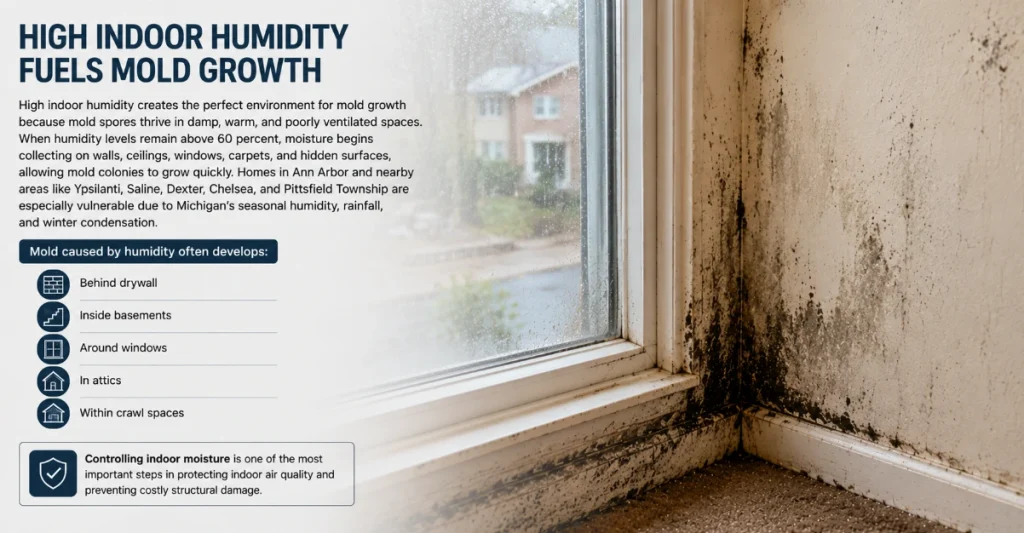
High indoor humidity creates the perfect environment for mold growth because mold spores thrive in damp, warm, and poorly ventilated spaces. When humidity levels remain above 60 percent, moisture begins collecting on walls, ceilings, windows, carpets, and hidden surfaces, allowing mold colonies to grow quickly. Homes in Ann Arbor and nearby areas like Ypsilanti, Saline, Dexter, Chelsea, and Pittsfield Township are especially vulnerable due to Michigan’s seasonal humidity, rainfall, and winter condensation.
Mold caused by humidity often develops behind drywall, inside basements, around windows, in attics, and within crawl spaces long before it becomes visible. Controlling indoor moisture is one of the most important steps in protecting indoor air quality and preventing costly structural damage.
Why Humidity Leads to Mold Growth
Mold spores naturally exist in the air both indoors and outdoors. However, mold only becomes a serious problem when moisture levels increase.
Humidity creates ideal conditions because mold needs:
- Moisture
- Warm temperatures
- Organic materials
- Limited airflow
Drywall, wood, insulation, carpeting, and ceiling materials all provide food sources for mold once moisture becomes trapped indoors.
Environmental health professionals consistently identify excess indoor humidity as one of the leading causes of residential mold contamination
What Indoor Humidity Level Causes Mold?
Most experts recommend maintaining indoor humidity between 30 and 50 percent.
When humidity rises above 60 percent, mold growth risks increase significantly.
High humidity often causes:
- Condensation on windows
- Damp walls and ceilings
- Moisture trapped behind furniture
- Musty odors
- Warped materials
- Mold around vents and baseboards
Humidity problems become even worse in older homes throughout Ann Arbor, especially properties with poor insulation and outdated ventilation systems.
Why Ann Arbor Homes Experience High Indoor Humidity
Michigan weather creates constant moisture fluctuations throughout the year.
Humid Summers
Warm summer air carries high moisture levels indoors, especially in homes without proper ventilation or air conditioning.
Winter Condensation
Cold winters create condensation when warm indoor air contacts cold windows, walls, and attic surfaces.
Heavy Rainfall and Snow Melt
Water intrusion around basements and foundations increases indoor humidity levels significantly.
Homes near the University of Michigan and older neighborhoods throughout Ann Arbor commonly experience humidity related mold issues because many buildings were constructed before modern moisture control standards existed.
Common Areas Where Humidity Causes Mold Indoors
Humidity related mold growth usually develops in areas with poor airflow and trapped moisture.
Basements
Basements are one of the most common mold hotspots because they naturally retain moisture.
High humidity in basements often leads to:
- Mold behind drywall
- Damp carpeting
- Concrete wall mold
- Musty odors
- Warped flooring
Many homes in Ypsilanti, Saline, and Pittsfield Township experience basement humidity problems after storms or seasonal snow melt.
Bathrooms
Bathrooms create constant moisture from showers and steam.
Without proper ventilation, humidity can lead to mold around:
- Bathtubs
- Ceiling corners
- Tile grout
- Drywall
- Exhaust vents
Attics
Poor attic ventilation traps warm humid air beneath roofing materials.
During Michigan winters, condensation inside attics commonly causes mold growth on:
- Wooden rafters
- Roof decking
- Insulation
- Ceiling cavities
Crawl Spaces
Crawl spaces often trap moisture because of poor airflow and ground humidity.
This hidden moisture can spread mold spores throughout the entire home.
Around Windows
Condensation around windows is one of the earliest warning signs of indoor humidity imbalance.
Repeated condensation can eventually lead to:
- Moldy window frames
- Peeling paint
- Water stained drywall
- Soft wall materials
Hidden Warning Signs of Humidity Related Mold
Humidity related mold often remains hidden before visible growth appears.
Homeowners should watch for:
- Persistent musty odors
- Condensation on windows
- Peeling paint
- Bubbling drywall
- Damp air indoors
- Water stains on ceilings or walls
- Increased allergy symptoms
- Respiratory irritation indoors
According to homeowner discussions online, many people notice symptoms improve after leaving moisture affected properties.

How Humidity Affects Indoor Air Quality
One issue many homeowners overlook is how humidity impacts indoor air quality.
Excess humidity allows mold spores, dust mites, and bacteria to multiply more rapidly indoors.
This can contribute to:
- Sneezing
- Nasal congestion
- Eye irritation
- Chronic coughing
- Asthma flare ups
- Sinus pressure
- Headaches
The Environmental Protection Agency emphasizes that controlling indoor moisture is the key to preventing mold related air quality problems.
Older homes throughout Ann Arbor, Dexter, and Chelsea are especially vulnerable because they often contain:
- Poor insulation
- Aging windows
- Outdated ventilation systems
- Basement seepage
- Older plumbing systems
- Limited airflow
Historic homes near downtown Ann Arbor and older university housing areas frequently experience hidden humidity buildup behind walls and inside attics.
How Poor Ventilation Traps Moisture Indoors
Ventilation plays a major role in moisture control.
Without proper airflow, humidity becomes trapped inside:
- Bathrooms
- Kitchens
- Laundry rooms
- Basements
- Crawl spaces
- Attics
Homes without functioning exhaust fans or attic ventilation systems are much more likely to develop mold contamination.
Seasonal Humidity Problems in Michigan Homes
Summer Mold Risks
During humid summers, moisture levels rise rapidly inside homes without dehumidifiers or air conditioning.
Winter Mold Risks
In winter, homes are sealed tightly to conserve heat, reducing airflow and increasing condensation.
Spring and Fall Moisture Changes
Heavy rain and fluctuating temperatures create repeated humidity swings that affect basements and crawl spaces.
Many local remediation professionals identify seasonal condensation as one of the most overlooked causes of hidden mold growth in Michigan homes.
How Professionals Detect Humidity Related Mold
Professional mold inspectors use specialized equipment to identify hidden moisture before severe mold growth appears.
Common tools include:
- Moisture meters
- Infrared thermal cameras
- Hygrometers
- Air quality testing equipment
These tools help identify moisture trapped behind walls, ceilings, and flooring materials.

How to Prevent Mold Caused by Humidity
Controlling indoor moisture is the most effective prevention strategy.
Use Dehumidifiers
Dehumidifiers help maintain safe indoor humidity levels, especially in basements.
Improve Ventilation
Use exhaust fans in bathrooms, kitchens, and laundry areas.
Fix Leaks Quickly
Repair roof leaks, plumbing issues, and foundation seepage immediately.
Monitor Indoor Humidity
Use humidity monitors to keep levels between 30 and 50 percent.
Improve Airflow
Allow air circulation around walls, windows, and furniture.
Inspect Basements and Attics Regularly
Look for condensation, dampness, and musty odors in high risk areas.
Why DIY Mold Cleanup Often Fails
Many homeowners clean visible mold without addressing the humidity problem causing it.
Surface cleaning alone rarely works because:
- Moisture remains trapped
- Humidity stays elevated
- Hidden mold continues spreading
- Poor ventilation is ignored
Professional remediation focuses on both mold removal and long term moisture control.
When Should You Call a Mold Remediation Professional?
You should contact a professional if you notice:
- Recurring mold growth
- Strong musty odors
- Persistent humidity indoors
- Water damage after storms or leaks
- Condensation throughout the home
- Worsening allergy symptoms
- Visible mold spreading on walls or ceilings
Certified remediation specialists can identify hidden moisture sources, improve indoor air quality, and prevent future contamination.
Final Thoughts
Humidity is one of the biggest causes of indoor mold growth because excess moisture allows mold spores to spread rapidly throughout walls, ceilings, basements, attics, and crawl spaces. Homes in Ann Arbor, Ypsilanti, Saline, Dexter, Chelsea, and surrounding Michigan communities are especially vulnerable due to seasonal humidity, condensation, and changing weather conditions.
The best way to prevent mold is to control indoor humidity early, improve ventilation, and address moisture problems before contamination spreads. Professional mold inspection and remediation help protect both your property and indoor air quality year round.