
Winter Condensation and Mold Problems in Michigan
Winter condensation is one of the leading causes of indoor mold problems in Michigan homes. When warm indoor air meets cold surfaces like windows, attic spaces, exterior walls, or poorly insulated ceilings, moisture forms through condensation. Over time, this trapped moisture creates ideal conditions for mold growth behind drywall, inside attics, around windows, and throughout basements.
Homes in Ann Arbor, Ypsilanti, Saline, Dexter, Chelsea, Canton, and surrounding Michigan communities are especially vulnerable during winter because freezing outdoor temperatures combined with indoor heating create major humidity and ventilation imbalances.
If condensation is ignored, hidden mold can spread quickly and lead to structural damage, poor indoor air quality, and costly repairs.

Why Winter Condensation Happens in Michigan Homes
Michigan winters create dramatic temperature differences between indoor and outdoor air.
Warm indoor air naturally contains moisture from:
- Cooking
- Showers
- Laundry
- Breathing
- Humidifiers
- Wet clothing and boots
When this humid air touches cold surfaces, water droplets form through condensation.
The Environmental Protection Agency explains that cold weather reduces the amount of moisture air can hold, causing condensation to develop on windows, walls, pipes, and other cold surfaces.
Why Condensation Causes Mold Growth
Mold spores already exist naturally in indoor air. However, they only grow when moisture becomes available.
Condensation creates persistent damp conditions that allow mold to spread on:
- Drywall
- Wood framing
- Ceiling materials
- Insulation
- Window frames
- Carpeting
- HVAC systems
The EPA states that moisture control is the key to preventing indoor mold growth
Common Areas Where Winter Mold Develops
Attics
Attics are one of the most common mold hotspots during Michigan winters.
Warm air from living spaces rises into cold attic areas, creating condensation beneath roof decking and rafters.
Signs of attic condensation include:
- Frost inside the attic
- Damp insulation
- Water stains
- Rusted nails
- Black spotting on wood
- Musty odors
Homeowners across Michigan frequently discuss attic mold caused by winter condensation and poor ventilation.
Around Windows
Condensation on windows is often the earliest visible warning sign of excessive indoor humidity.
Repeated moisture buildup can lead to:
- Moldy window frames
- Peeling paint
- Soft drywall
- Water stained walls
Older homes near downtown Ann Arbor and neighborhoods surrounding the University of Michigan commonly experience severe window condensation during freezing temperatures.
Basements
Basements naturally retain moisture, especially during winter snow melt and fluctuating temperatures.
Condensation problems in basements can cause:
- Mold behind drywall
- Damp carpeting
- Concrete wall mold
- Musty odors
- Warped flooring
Homes in Ypsilanti, Pittsfield Township, and Saline frequently experience basement humidity problems after winter storms.
Exterior Walls
Poor insulation allows cold air to cool interior wall surfaces.
This often causes hidden condensation behind:
- Drywall
- Furniture
- Cabinets
- Baseboards
The EPA notes that hidden mold frequently develops inside walls where condensation forms around pipes and cold surfaces.
Crawl Spaces
Crawl spaces often trap moisture because of cold outdoor air and limited ventilation.
During winter, condensation beneath flooring can create ideal conditions for hidden mold colonies.
Why Older Michigan Homes Develop Winter Mold Faster
Older homes throughout Ann Arbor, Dexter, Chelsea, and Canton are especially vulnerable because many contain:
- Outdated insulation
- Aging windows
- Poor attic ventilation
- Basement seepage
- Air leaks
- Older roofing systems
Historic homes and older university housing areas often struggle with indoor humidity control during freezing winters.
Hidden Warning Signs of Winter Condensation Mold
Mold caused by winter condensation often remains hidden long before visible growth appears.
Homeowners should watch for:
- Persistent musty odors
- Water droplets on windows
- Peeling paint
- Bubbling drywall
- Damp attic insulation
- Water stains on ceilings
- Soft wall materials
- Increased allergy symptoms
- Respiratory irritation indoors
The EPA explains that mold may remain hidden behind drywall, wallpaper, carpeting, insulation, and inside ductwork.

Excess winter moisture can significantly reduce indoor air quality.
Common symptoms linked to mold exposure include:
- Sneezing
- Nasal congestion
- Eye irritation
- Chronic coughing
- Headaches
- Asthma flare ups
- Skin irritation
Many homeowners report feeling better after leaving moisture affected environments. Online homeowner discussions often connect winter condensation issues with respiratory discomfort and attic mold concerns.
Poor Ventilation Makes Condensation Worse
One of the biggest causes of winter mold is poor ventilation.
Without airflow, humidity becomes trapped indoors and settles on cold surfaces.
Common ventilation problems include:
- Blocked soffit vents
- Poor attic airflow
- Non functioning bathroom fans
- Sealed windows
- Improper HVAC airflow
- Air leaks into attic spaces
Michigan homeowners frequently discuss attic condensation caused by ventilation and air sealing problems during winter.
How Professionals Detect Hidden Winter Mold
Professional mold inspectors use specialized equipment to identify moisture before severe contamination develops.
Common tools include:
- Infrared thermal cameras
- Moisture meters
- Hygrometers
- Air quality testing equipment
Thermal imaging can help detect cold spots and hidden condensation inside walls and ceilings.
How to Prevent Winter Condensation and Mold
Preventing winter mold requires moisture control and proper ventilation.
Lower Indoor Humidity
Keep humidity levels between 30 and 50 percent during winter.
The EPA recommends reducing indoor humidity to decrease mold growth risks.
Improve Attic Ventilation
Proper soffit and ridge ventilation help remove humid air from attic spaces.
Use Bathroom and Kitchen Exhaust Fans
Ventilation helps remove steam and indoor moisture before condensation develops.
Seal Air Leaks
Prevent warm indoor air from escaping into attic and wall cavities.
Insulate Cold Surfaces
Proper insulation reduces condensation on walls, pipes, and ceilings.
Monitor Window Condensation
Persistent condensation often indicates excessive indoor humidity.
Use Dehumidifiers
Basements and older homes may require dehumidifiers during winter months.
Why DIY Cleanup Often Fails
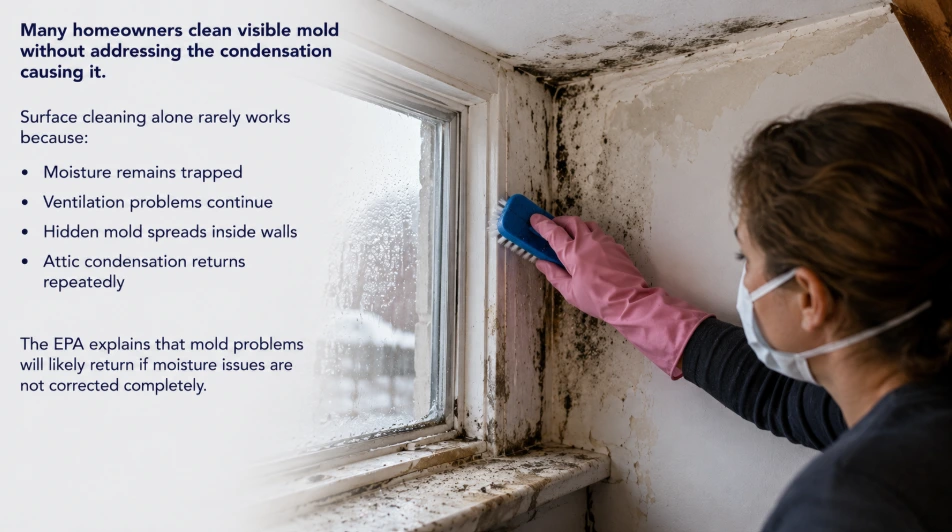
Many homeowners clean visible mold without addressing the condensation causing it.
Surface cleaning alone rarely works because:
- Moisture remains trapped
- Ventilation problems continue
- Hidden mold spreads inside walls
- Attic condensation returns repeatedly
The EPA explains that mold problems will likely return if moisture issues are not corrected completely.
When Should You Call a Mold Remediation Professional?
You should contact a professional if you notice:
- Recurring mold growth
- Persistent musty odors
- Heavy window condensation
- Attic moisture problems
- Water stains on ceilings
- Worsening allergy symptoms indoors
- Visible mold spreading in winter
Certified mold remediation specialists can identify hidden moisture sources, improve ventilation, and safely remove contamination before structural damage worsens.
Final Thoughts
Winter condensation is one of the biggest causes of indoor mold growth in Michigan homes because freezing outdoor temperatures and indoor humidity create constant moisture buildup on cold surfaces. Homes throughout Ann Arbor, Ypsilanti, Saline, Dexter, Chelsea, Canton, and nearby communities are especially vulnerable during winter months due to attic condensation, poor ventilation, basement moisture, and aging insulation systems.
The best way to prevent winter mold problems is to control indoor humidity, improve airflow, and address condensation early before hidden moisture spreads through walls, ceilings, and attic spaces. Professional mold inspection and remediation help protect indoor air quality, structural integrity, and long term property health throughout Michigan winters.