
Kitchen Mold Removal and Moisture Control
Kitchen mold removal starts with identifying excess moisture, hidden leaks, poor ventilation, and humidity buildup inside the home. Kitchens naturally produce steam, condensation, and water exposure from sinks, cooking, dishwashers, and plumbing systems, making them one of the most common areas for indoor mold growth. In Ann Arbor and nearby areas like Ypsilanti, Saline, Dexter, Chelsea, Canton, and Pittsfield Township, seasonal humidity and winter condensation can increase the risk of kitchen mold problems even further.
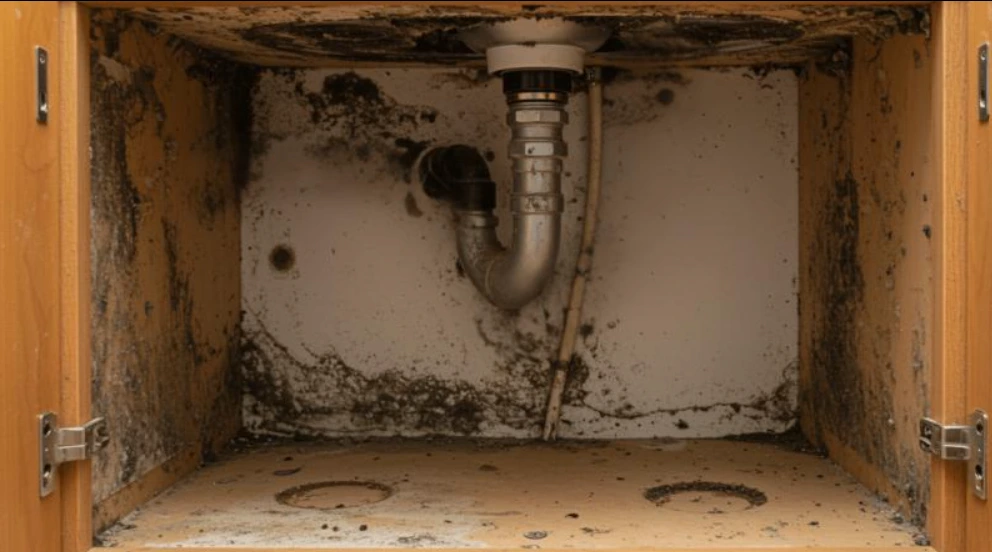
Mold often develops beneath sinks, behind cabinets, around dishwashers, inside drywall, and near windows long before homeowners notice visible damage. Proper moisture control and early remediation help protect indoor air quality, structural materials, and long term property health.
Kitchens create daily moisture from:
- Cooking steam
- Water spills
- Plumbing systems
- Dishwashers
- Refrigerator condensation
- Sink usage
When moisture remains trapped indoors, mold spores begin spreading on damp surfaces and hidden materials.
Kitchen mold commonly develops on:
- Drywall
- Cabinets
- Ceiling corners
- Tile grout
- Under sinks
- Around windows
- Flooring materials
- Behind appliances
Homes throughout Ann Arbor and older Michigan neighborhoods frequently experience hidden kitchen mold because many older properties contain outdated plumbing and limited ventilation.
Hidden Plumbing Leaks Cause Kitchen Mold
One of the leading causes of kitchen mold is hidden plumbing leaks.
Slow leaks beneath sinks and behind appliances can allow moisture to remain trapped for months before visible signs appear.
Common kitchen leak sources include:
- Sink drain pipes
- Dishwasher connections
- Refrigerator water lines
- Garbage disposal systems
- Faucet plumbing
- Water supply valves
Hidden leaks often lead to mold growth behind cabinets and inside wall cavities.
Kitchens naturally generate humidity during cooking and cleaning.
Steam from boiling water, dishwashers, and hot surfaces increases indoor moisture levels significantly.
During Michigan winters, condensation often forms on:
- Kitchen windows
- Exterior walls
- Cabinets
- Pipes
- Ceiling surfaces
Homes near the University of Michigan and older residential areas throughout Ann Arbor commonly experience kitchen condensation problems because of temperature differences between indoor and outdoor air.
Poor Ventilation Traps Moisture Indoors
Without proper airflow, kitchen humidity remains trapped and creates ideal mold conditions.
Signs of poor kitchen ventilation include:
- Persistent condensation
- Musty odors
- Damp cabinets
- Peeling paint
- Fogged windows
- Ceiling discoloration
Many older homes in Dexter, Chelsea, and Ypsilanti lack modern ventilation systems that effectively remove cooking moisture.
Mold Beneath Kitchen Sinks
The area beneath kitchen sinks is one of the most common hidden mold locations.
Moisture often develops because of:
- Pipe leaks
- Dripping faucets
- Condensation on plumbing
- Poor airflow inside cabinets
Homeowners may notice:
- Musty smells
- Warped cabinet wood
- Soft materials
- Water stains
- Black discoloration
If left untreated, mold can spread into surrounding drywall and flooring.

Dishwasher and Refrigerator Mold Problems
Appliances can also create hidden moisture issues.
Dishwashers may leak around seals or plumbing connections, while refrigerators often produce condensation beneath or behind the unit.
Mold commonly develops:
- Behind refrigerators
- Beneath dishwashers
- Around appliance water lines
- Under flooring materials
These hidden moisture areas often remain unnoticed until odors or structural damage appear.
Kitchen Mold Around Windows
Kitchen windows frequently collect condensation during winter.
Warm humid indoor air contacting cold glass creates moisture buildup that can damage surrounding drywall and window frames.
Repeated condensation may cause:
- Mold around trim
- Peeling paint
- Soft drywall
- Window frame discoloration
Homes throughout Canton and Saline often experience kitchen window condensation during freezing Michigan temperatures.
How Kitchen Mold Affects Indoor Air Quality
Kitchen mold can reduce indoor air quality by releasing airborne spores throughout the home.
Exposure may contribute to:
- Sneezing
- Nasal congestion
- Eye irritation
- Chronic coughing
- Asthma flare ups
- Respiratory discomfort
The Environmental Protection Agency explains that mold exposure may trigger health symptoms in moisture affected indoor environments.
Common Warning Signs of Kitchen Mold
Kitchen mold often remains hidden before becoming visible.
Homeowners should monitor for:
- Persistent musty odors
- Water stains beneath sinks
- Peeling cabinet surfaces
- Bubbling drywall
- Damp flooring
- Increased indoor humidity
- Mold around windows
- Respiratory irritation indoors
Many families living in moisture affected homes report noticing stronger symptoms inside poorly ventilated areas.
Why Older Michigan Homes Develop Kitchen Mold Faster
Older homes throughout Ann Arbor, Ypsilanti, Chelsea, and Pittsfield Township are especially vulnerable because many contain:
- Aging plumbing systems
- Poor insulation
- Outdated ventilation
- Older cabinetry
- Hidden wall moisture
- Limited airflow
Historic homes often develop hidden kitchen mold behind cabinets and inside walls where leaks remain unnoticed.
Professional Kitchen Mold Removal Process
Professional mold remediation focuses on both mold removal and moisture control.
The process commonly includes:
Moisture Inspection
Professionals identify hidden leaks, humidity problems, and moisture damaged materials.
Containment
Affected areas are isolated to prevent mold spores from spreading.
Mold Removal
Contaminated materials are removed safely using industry approved methods.
Air Filtration
HEPA air scrubbers help improve indoor air quality during remediation.
Cleaning and Sanitization
Surfaces are cleaned and treated to reduce residual contamination.
Moisture Prevention
Underlying leaks and ventilation issues are corrected to prevent future mold growth.
How to Prevent Kitchen Mold
Preventing kitchen mold requires consistent moisture control and maintenance.
Fix Leaks Quickly
Repair plumbing leaks before moisture spreads behind cabinets and walls.
Improve Ventilation
Use kitchen exhaust fans during cooking to remove steam and humidity.
Monitor Humidity Levels
Maintain indoor humidity between 30 and 50 percent.
Clean Moisture Prone Areas Regularly
Dry surfaces beneath sinks and around appliances.
Inspect Appliances
Check dishwashers and refrigerators for leaks or condensation buildup.
Improve Airflow
Allow airflow around cabinets, appliances, and kitchen corners.
Address Window Condensation
Reduce humidity and improve insulation around kitchen windows.

Why DIY Mold Cleanup Often Fails
Many homeowners clean visible mold without correcting the moisture source causing it.
This often leads to recurring contamination because:
- Leaks remain hidden
- Humidity stays elevated
- Mold spreads behind walls
- Ventilation problems continue
Professional remediation addresses both visible mold and underlying moisture conditions.
When Should You Call a Mold Remediation Professional?
You should contact a professional if you notice:
- Recurring kitchen mold
- Strong musty odors
- Water damaged cabinets
- Hidden plumbing leaks
- Mold spreading behind walls
- Soft drywall or flooring
- Persistent indoor humidity
Early remediation helps prevent larger structural and indoor air quality problems.
Final Thoughts
Kitchen mold is usually caused by excess moisture, hidden plumbing leaks, poor ventilation, and indoor humidity buildup. Homes throughout Ann Arbor, Ypsilanti, Saline, Dexter, Chelsea, Canton, and surrounding Michigan communities are especially vulnerable because seasonal weather changes create ongoing moisture fluctuations indoors.
The best way to prevent kitchen mold is to control humidity, improve ventilation, inspect plumbing systems regularly, and address leaks quickly before hidden contamination spreads behind cabinets, walls, and flooring materials. Professional mold remediation and moisture control help protect indoor air quality and long term property health year round.