
Mold Inspection vs Mold Testing: What’s the Difference?
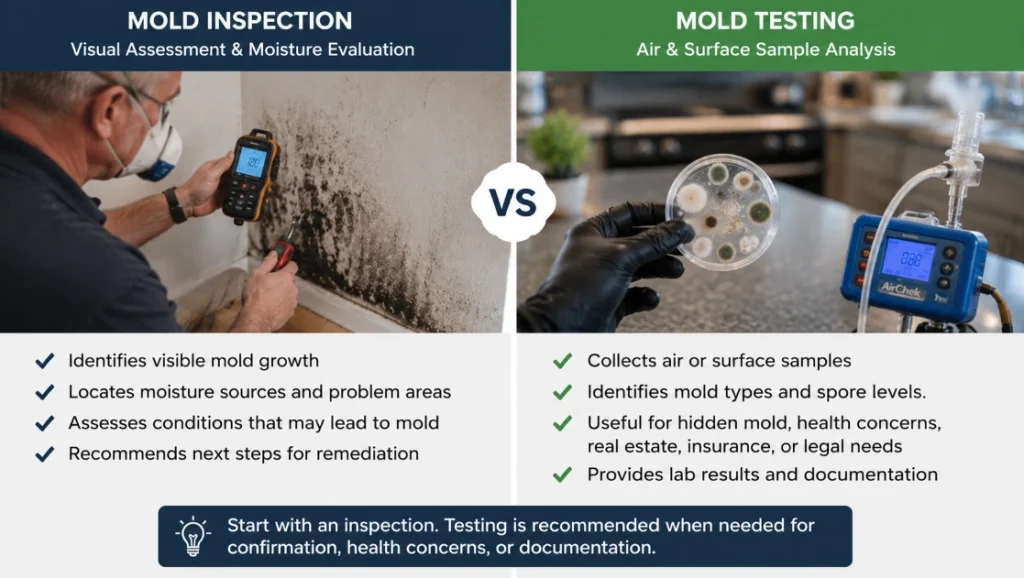
If you suspect mold in your home, the first thing you should understand is that mold inspection and mold testing are not the same service. A mold inspection identifies visible mold, moisture issues, and areas at risk for contamination, while mold testing collects air or surface samples to determine the type and concentration of mold spores present indoors.
In most residential situations, homeowners in Ann Arbor benefit from starting with a professional mold inspection first. Testing is usually recommended when hidden mold is suspected, health symptoms are present, or documentation is needed for real estate, insurance, or tenant disputes.
Understanding the difference can save you time, money, and unnecessary remediation costs.
Why Homeowners Confuse Mold Inspection and Mold Testing
Many restoration and environmental companies use these terms interchangeably, which creates confusion for homeowners. Competitor analysis across major remediation websites shows that most companies explain the services separately because each one serves a different purpose.
A mold inspection focuses on identifying the source of the problem, while mold testing provides laboratory analysis of mold spores and contamination levels.
Think of it this way:
- Inspection finds the problem
- Testing confirms and measures the problem
- Remediation solves the problem
What Is a Mold Inspection?
A mold inspection is a visual and moisture based assessment of a property performed by a trained mold professional.
The goal is to locate visible mold growth, moisture intrusion, water damage, humidity problems, and conditions that allow mold to spread.
Professional inspectors commonly evaluate:
- Basements
- Crawl spaces
- Attics
- Bathrooms
- HVAC systems
- Drywall and insulation
- Areas with previous leaks or flooding
Most reputable inspectors also use specialized equipment such as:
- Moisture meters
- Infrared thermal cameras
- Hygrometers
- Humidity sensors
According to industry experts, mold inspections are usually the first and most important step because mold growth is almost always connected to moisture problems.
What Happens During a Mold Inspection?
A typical mold inspection includes several steps designed to locate hidden contamination and identify moisture sources.
Visual Assessment
The inspector checks for visible mold, water stains, warped materials, and musty odors.
Moisture Detection
Moisture mapping tools help identify wet drywall, condensation issues, plumbing leaks, and hidden dampness behind surfaces.
Ventilation Evaluation
Poor airflow is a major contributor to mold growth, especially in attics, bathrooms, and basements.
Inspection Report
After the inspection, homeowners usually receive a written report outlining:
- Areas affected by mold
- Moisture sources
- Risk level
- Recommended remediation steps
- Prevention suggestions
Many competitors fail to explain that a detailed report is one of the most important parts of the process because it creates accountability and provides a roadmap for remediation.
What Is Mold Testing?
Mold testing involves collecting air, surface, or bulk samples and sending them to a laboratory for analysis.
The purpose of testing is to identify:
- Mold species
- Airborne spore levels
- Indoor air contamination
- Hidden mold activity
- Severity of exposure
Testing can help determine whether mold spores inside the property are elevated compared to outdoor levels.
Types of Mold Testing
Air Sampling
Air samples measure the concentration of mold spores circulating indoors.
Surface Sampling
Swab or tape lift samples are taken from visible mold growth on surfaces.
Bulk Sampling
Pieces of contaminated material such as drywall or insulation are tested in a laboratory.
Professional testing companies often compare indoor and outdoor samples to determine whether indoor contamination is abnormal.

When Do You Need Mold Testing?
Not every mold situation requires testing.
According to competitor research and homeowner discussions on Reddit, testing is most useful in specific situations rather than every case.
Testing is often recommended when:
- Mold is suspected but not visible
- Health symptoms continue without explanation
- Real estate transactions require documentation
- Tenant disputes involve indoor air quality
- Post remediation clearance is needed
- Multiple mold species may be present
- HVAC contamination is suspected
The Environmental Protection Agency also notes that visible mold usually does not require testing because remediation should begin immediately once contamination is confirmed visually.
Why Moisture Detection Matters More Than Testing Alone
One major content gap among competing mold websites is the lack of focus on moisture science.
Mold cannot survive without moisture. That means identifying leaks, humidity issues, condensation, or water intrusion is often more important than simply identifying mold species.
In Michigan, seasonal humidity and freezing winters create common conditions for:
- Basement mold
- Attic condensation
- Window moisture buildup
- Crawl space humidity
- Ice dam related mold growth
Without correcting the moisture issue, mold often returns after cleaning.
Homeowners on Reddit frequently report recurring mold problems because remediation was performed without solving the underlying water issue
Can You Skip Mold Testing?
In many cases, yes.
If mold is already visible and moisture sources are obvious, professional remediation can usually begin without laboratory testing.
For example:
- Visible black mold behind drywall
- Basement mold after flooding
- Attic mold from poor ventilation
- Bathroom mold from humidity buildup
Testing may not change the remediation process in these situations.
However, testing becomes valuable when contamination is hidden or legal documentation is required.
Which Service Should Homeowners in Ann Arbor Choose?
For most homeowners in Ann Arbor, a professional mold inspection is the smartest first step.
Inspection helps determine:
- Whether mold is actually present
- Where the moisture is coming from
- How severe the contamination is
- Whether testing is necessary
- What remediation approach should be used
Testing can then be added if additional confirmation or air quality data is needed.
Warning Signs You Should Schedule an Inspection
You should consider scheduling a mold inspection if you notice:
- Persistent musty odors
- Water stains on ceilings or walls
- Increased indoor humidity
- Condensation on windows
- Recent flooding or leaks
- Peeling paint or bubbling drywall
- Respiratory irritation indoors
- Allergy symptoms worsening at home
Mold often grows behind surfaces long before it becomes visible.

Final Thoughts
Mold inspection and mold testing work together, but they are not the same process.
Inspection focuses on locating mold growth, moisture problems, and structural risks. Testing focuses on identifying mold species and measuring airborne contamination levels.
For most homeowners, a professional mold inspection is the best place to start because solving moisture problems is the key to long term mold prevention. Testing becomes valuable when hidden contamination, health concerns, or legal documentation require additional evidence.
Understanding the difference helps homeowners make informed decisions, avoid unnecessary expenses, and protect indoor air quality more effectively.